EVERY THREAD IS A FAITH AND EVERY TABLE AN EXPERIMENT
(About Situación Nro 1. by Natalia Giannangeli) By Julián León Camargo
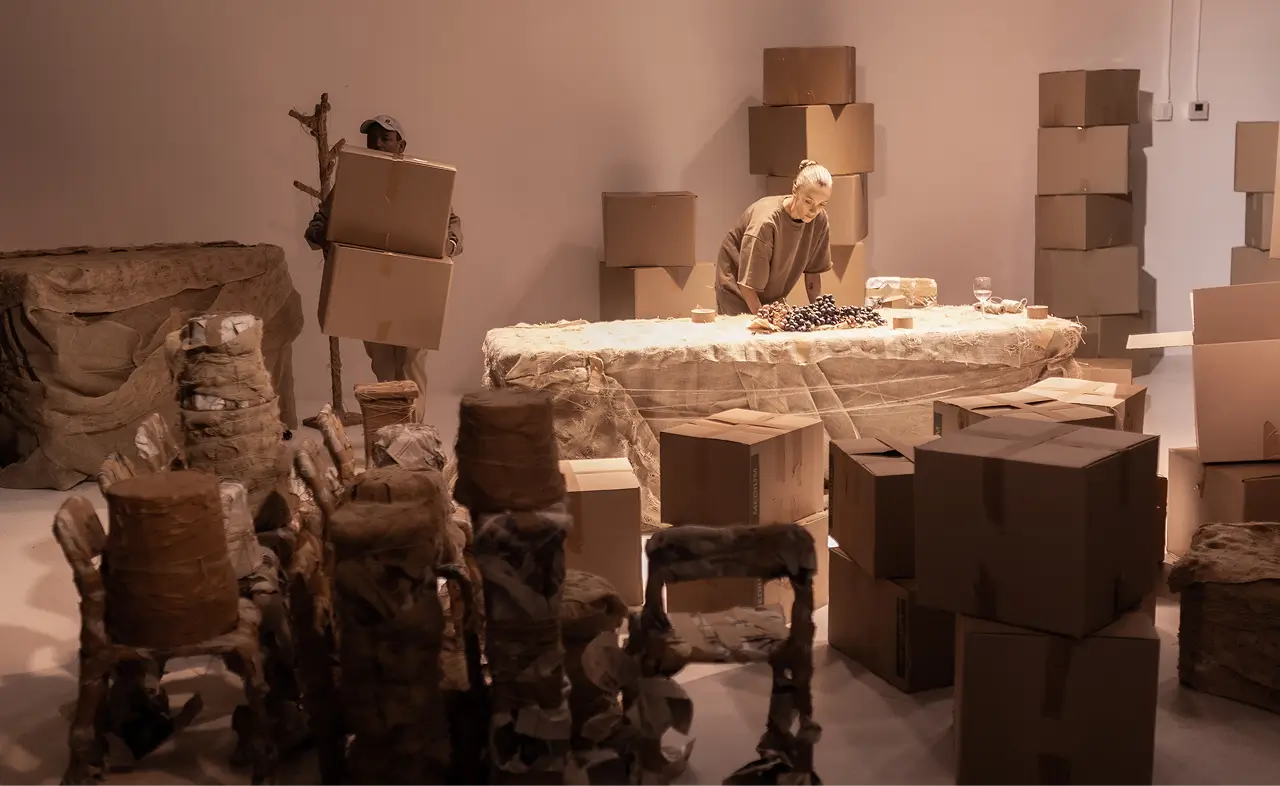
Several years ago in Bolívar, a town in the interior of the Province of Buenos Aires, in Argentina, someone would set a table: tablecloth, napkins, silverware, glassware, plates, a platter of milanesas, mashed potatoes, an occasional salad. Nothing different from any other Argentine table. Some wine, lemonade, Coca-Cola, or flavored water, maybe soda. The father at the head, the mother who never sits because she is busy serving everyone, and the obedient daughters to this family ritual in their chairs. Long conversations, laughter, anecdotes, as well as heated discussions, some shouting, tears, uncomfortable silences, all that colorful array of family life situations that oscillate between the order and chaos of the everyday. Perhaps it was in those days of family dinners that Natalia’s passion, which we can recognize today in her grand and elaborate tables, began to take shape. Perhaps in that communal food mantra is where Natalia understands that setting a table is configuring an ephemeral device that seeks the event, that pursues the unpredictable nature of spontaneity. Perhaps in every family dinner of those lost years in the memory of Bolívar, Natalia understands that every table is an invocation of the uncertain, a fervent prayer for surprise.
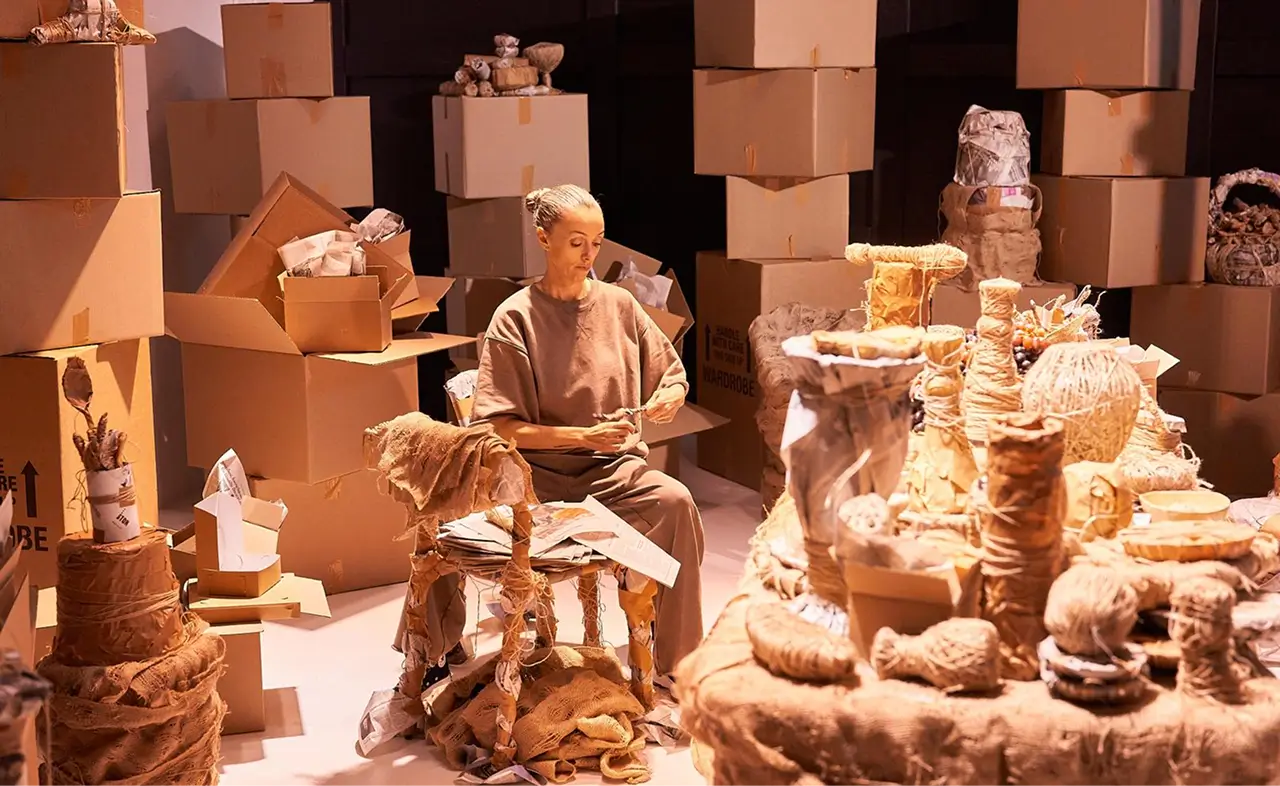
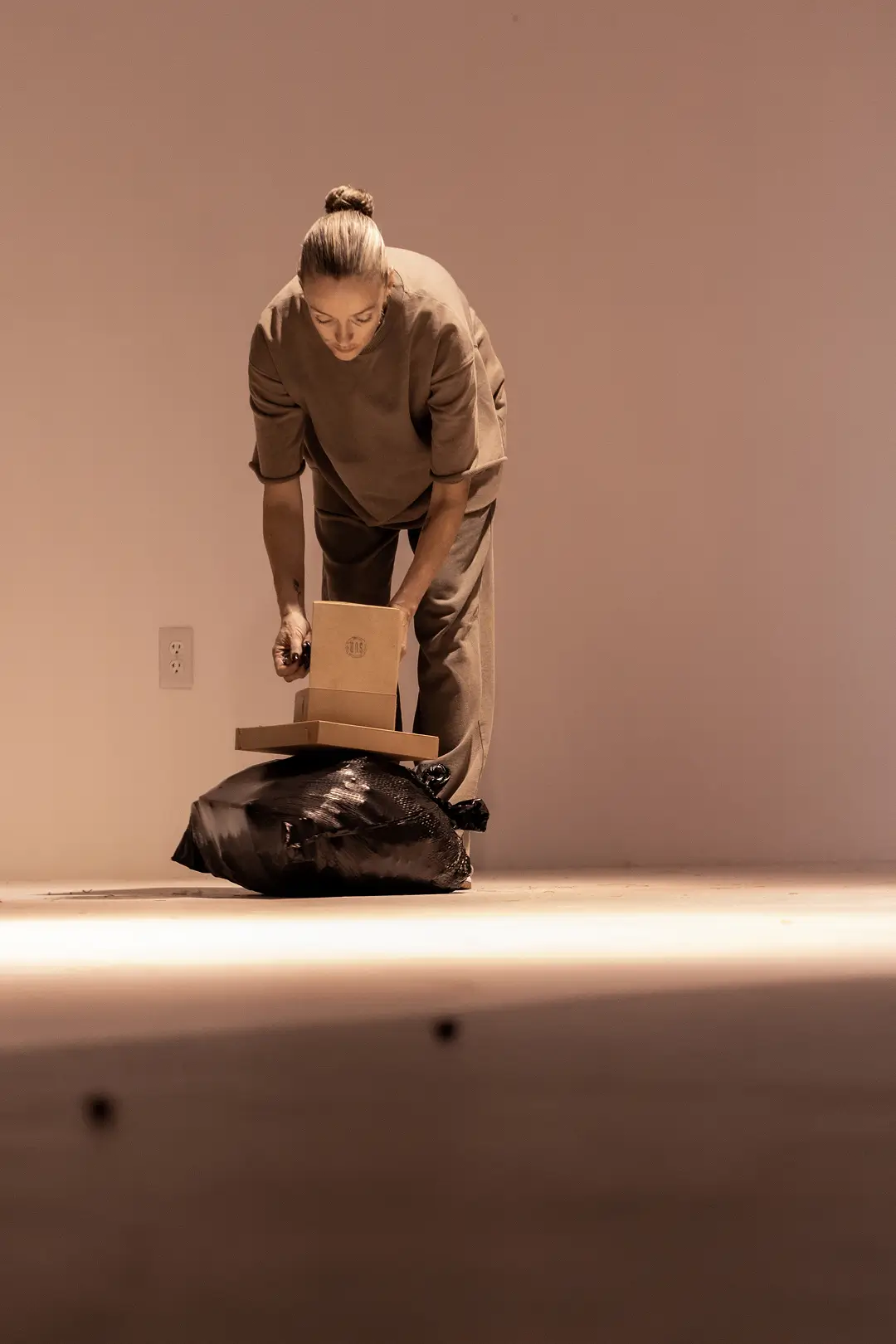
Today, Natalia invites us to sit at a new table. Each present element in various ways points us to an event in which we have all participated in one way or another throughout our lives; moving, shifting what we call home from one point to another. It is likely that in this city full of immigrants, pilgrims, and outsiders, this table resonates in a particular way. Moving is one of the most stressful experiences a person goes through in their life. Packing is a difficult, tortuous task that involves to some extent taking inventory of our belongings, and the truth is, as Umberto Eco once said, every inventory is “an attempt to give order to the infinite.” When one starts to pack and wrap each of the objects accumulated over the years, it’s common to feel overwhelmed. Objects seem to extend to infinity, and it’s not uncommon that in the midst of this seemingly endless task, one wonders when one gathered so many things.
That’s why every move has an inevitable moment of editing, where one takes the opportunity to get rid of the dispensable, to throw away everything that doesn’t deserve to cross over, and to select, from that infinite number of memory evokers that are things, what one cannot afford to leave behind. First the useful, the necessary, sofas, pots, plates, lamps, etc. That part is relatively easy, maybe an old duvet will be discarded, perhaps it’s time to get rid of that tacky vase gifted by the maternal aunt, or even an opportunity to give away and even auction the sofa bed that takes up so much space and has never been used. The tricky part comes after; there are useless objects that always accompany us, that anchor us to the past, that extend roots in our history. The grandmother’s pendulum clock that never tells the right time, the books marked by father’s tobacco burns, the love letters from that adolescent romance that never flourished but marked us forever, the old tube television bought by our mother with a month’s salary to keep us company during the early years of college, the vintage glasses we bought at that flea market when we moved out to live alone for the first time, the trophy from that soccer championship we won with that glorious last-minute goal.
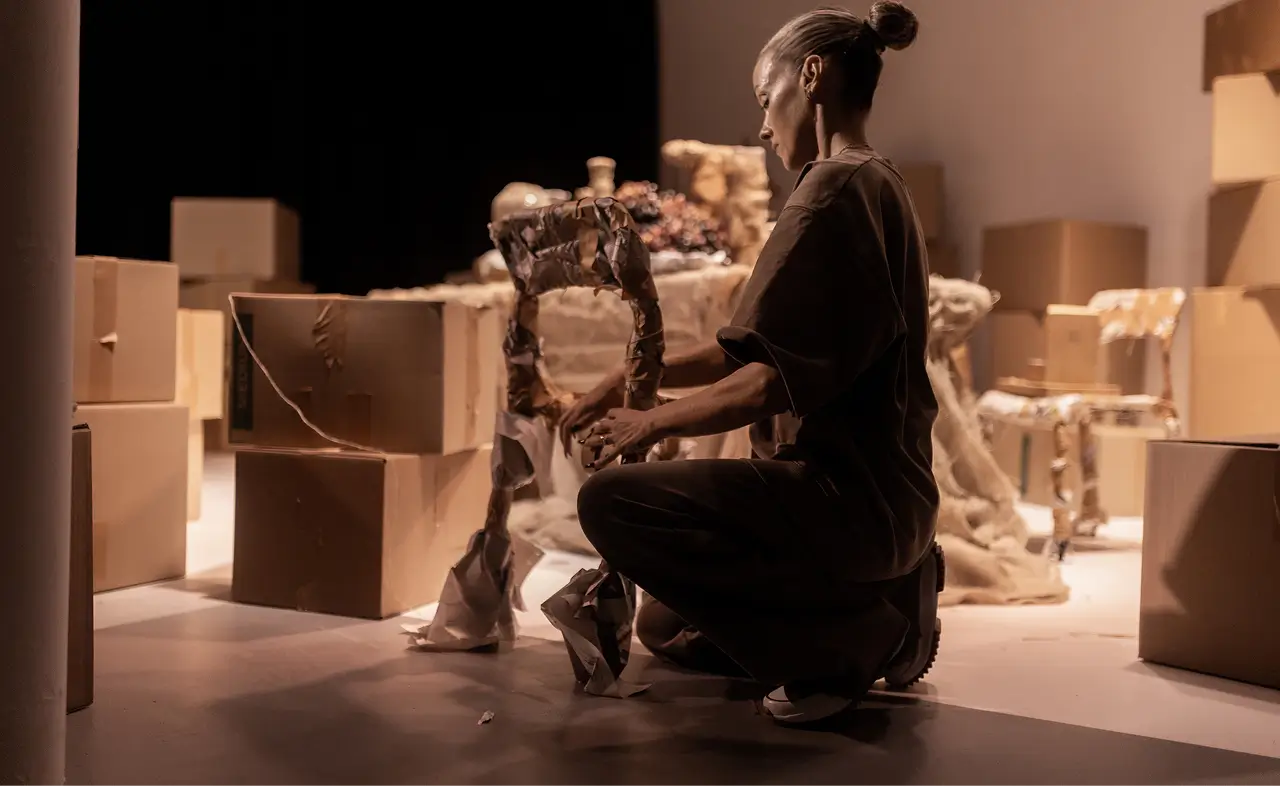
How to get rid of these useless things, how to say goodbye to these relics that tell a bit of our story? No, we can’t; we know that throwing away even one of these things would mean losing a part of ourselves, and that act of courage and detachment is usually uncommon. So we pack them, carefully protect each one so they survive the journey, surround them with care so they travel with us. Some cardboard, or maybe bubble wrap, any means that allows them to reach a safe harbor.
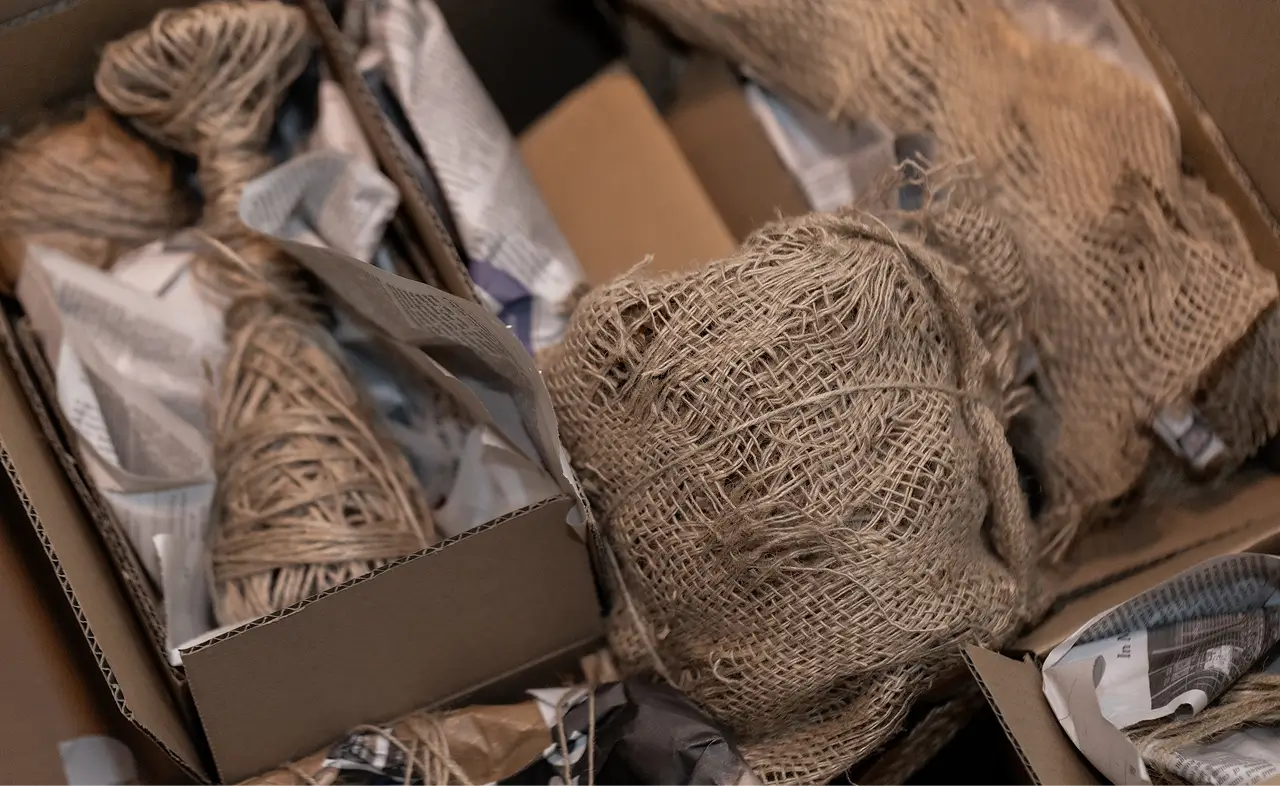
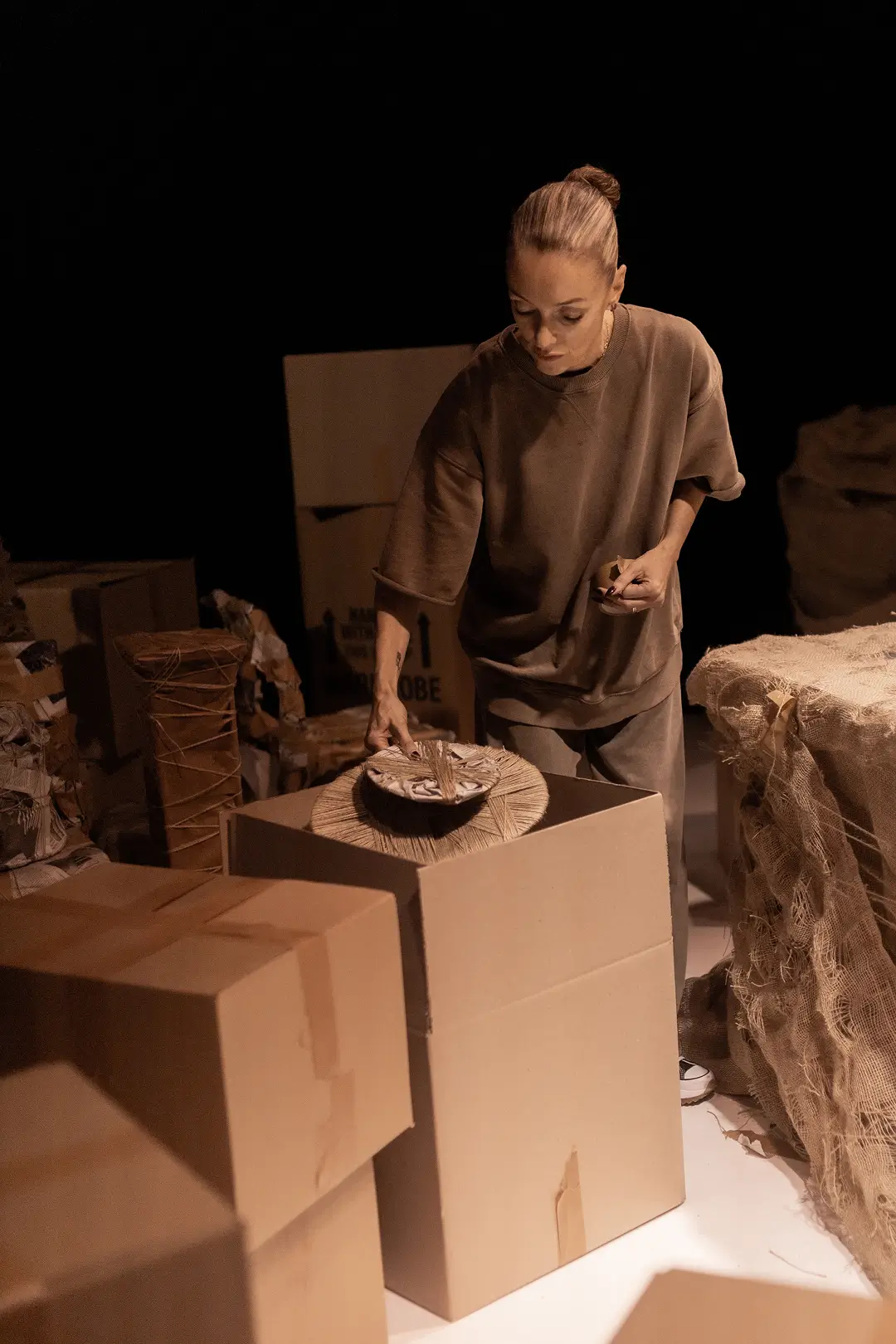
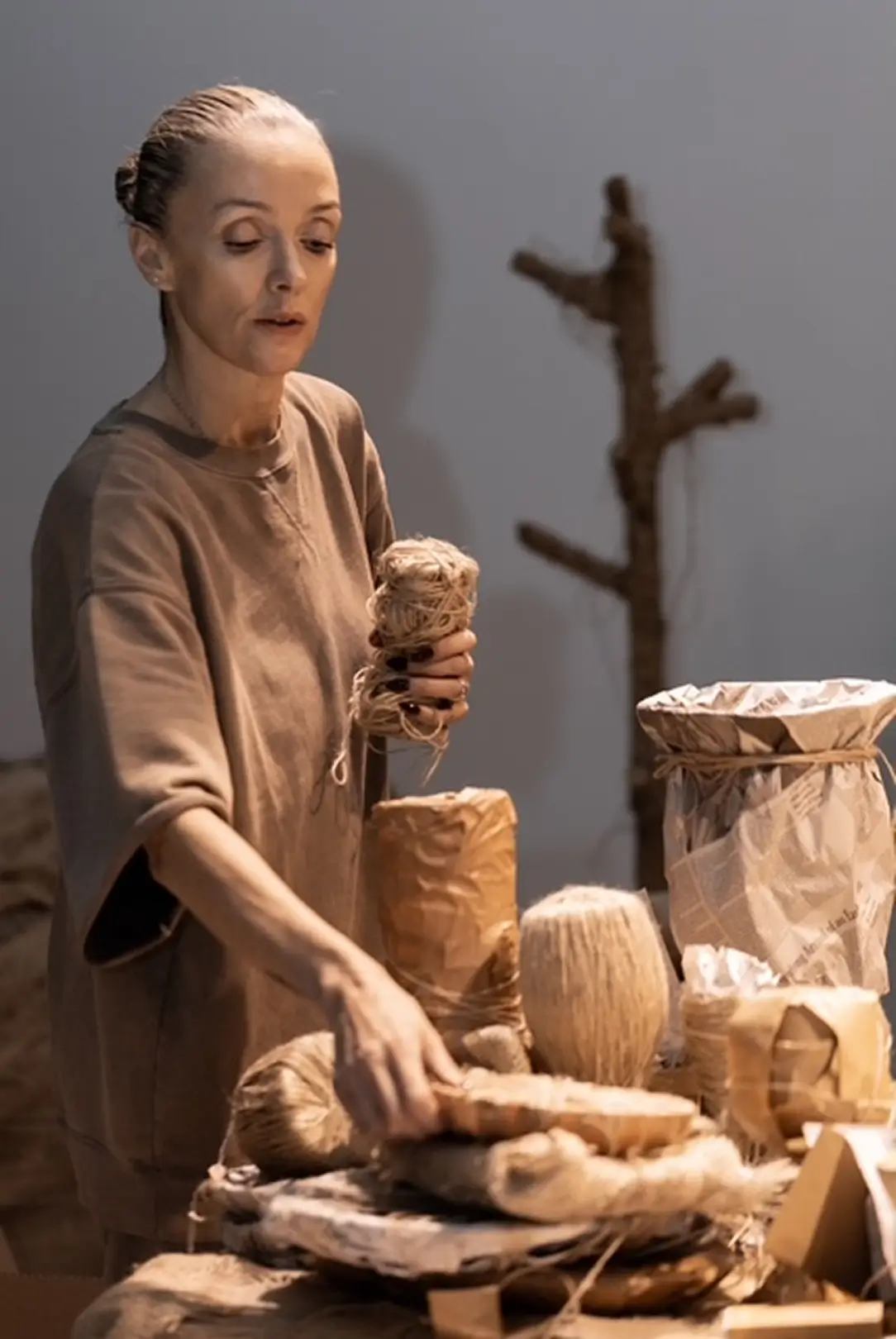
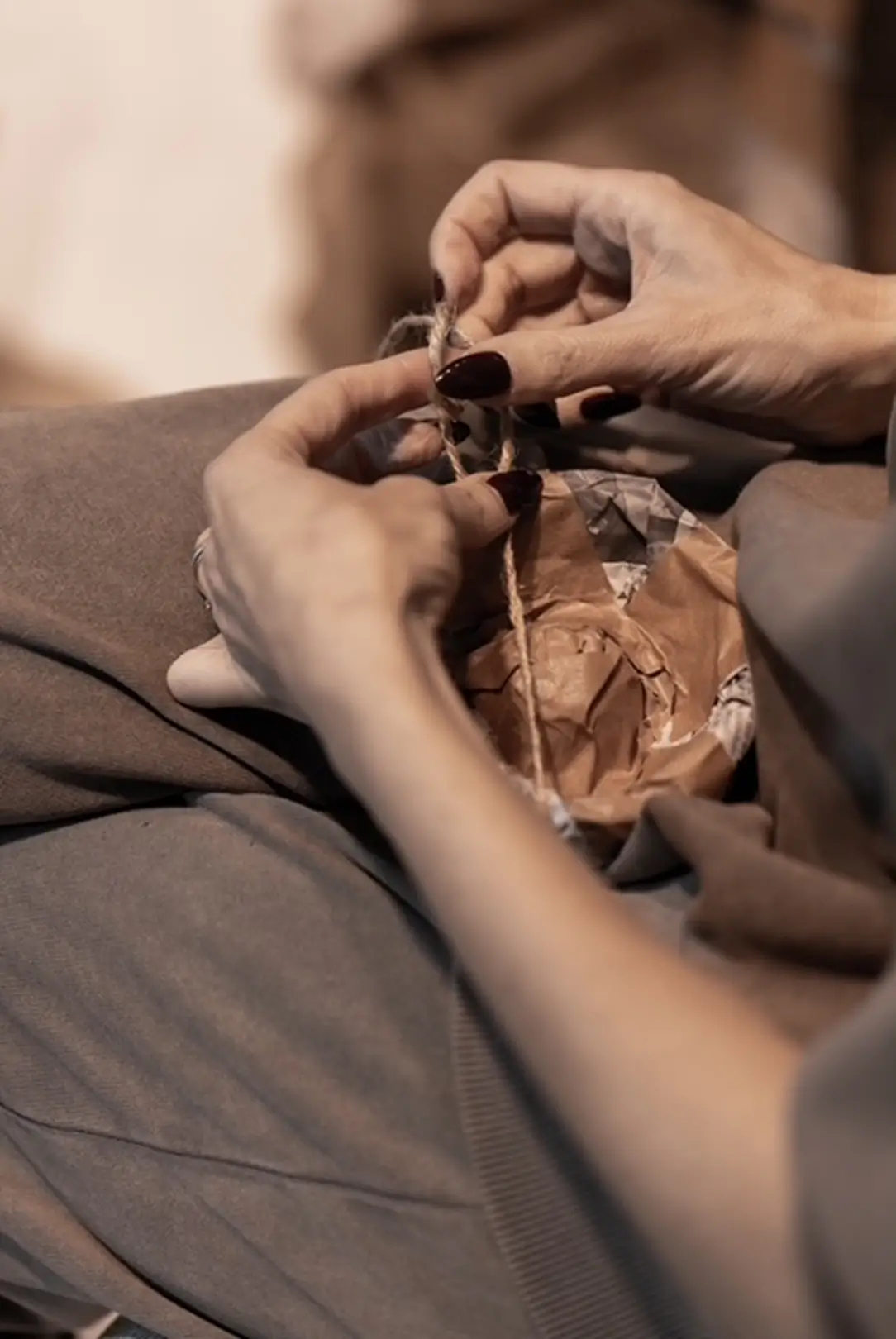
This time, Natalia uses thread to wrap these objects, she wraps each one with a skein to create a protective layer around them. The action lacks practicality but overflows with poetry; as if the thread were a line that connects all these objects that otherwise have no connection, a line that links them as points of the same story, of a narrative that at the end of the day is the tale of our lives. Natalia is a thread that connects all these things, this place, us sitting at the table before the moving men come and take everything and conclude this dinner.