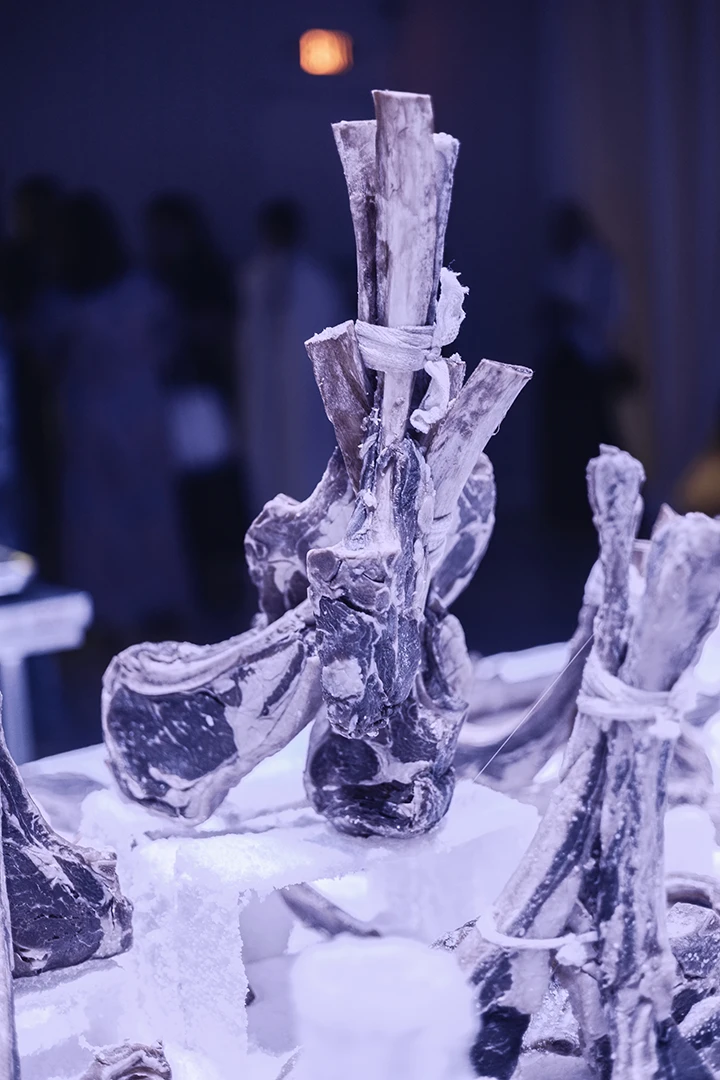
Situación Nro 2. – Natalia Giannangeli
Text Julián León Camargo
Perhaps one of Borges’ most extraordinary yet unfortunate audacities was conceiving of Funes: the idea of a man incapable of forgetting is, upon calm reflection, a dreadful and horrifying concept. A man who retains every moment he has lived, each image he has seen, every text, face, tree, laugh, cat, dog, rest, agitation, pain, anguish, house, room, wait, dream, joy—every experience, good, bad, comical, or tragic, vivid in his mind—would be tortured by an unrelenting memory no person could endure. Forgetfulness is a gift we undervalue. The ability to transfer lived experiences into the intricate archive we call memory is a precious gift we take for granted. Yet in that process of transfer, there are remnants, indelible marks, ghosts, echoes. These are not memories; no, remembering is an action inherent to the archive that, as its name suggests, involves bringing back (to the heart). These echoes are something else entirely; they are the weight of something one failed to name at the time, returning to settle into life when it can no longer be ignored. It is as if the past possesses infinite patience, waiting for the exact moment to ask: “Do you see it now?” Freud assigned it a complex yet beautiful term: “deferred action.” It is something we all carry within us: those invisible hands from the past that continue to shape us, even when we believe we are already free.
It is like when you were a child at a family gathering—the kind where adults drink cheap wine and discuss matters you do not understand, yet they ask you to remain still, to smile, to be “good.” Suddenly, you do something insignificant, like touching a tablecloth, moving a glass, or simply breathing too loudly. And there’s that authoritative gaze, those eyes that admit no excuses. Without uttering a word, they approach, placing a hand upon you, devoid of tenderness, with a force that leaves a mark, as if sculpting something in you that you do not comprehend.
That hand does not merely press. It moves you, turns you, positions you before others as if you were a statue that needs adjusting to fit properly in the display. You remain there, smaller than before, feeling it. Although it is no longer upon you, it seems to have etched itself into your skin.
At the time, you do not think much of it. You only know that something is amiss, but you lack the words to express it. It is just another scene in a childhood where the world moves around you, and you merely try not to be too bothersome.
Years later, as an adult, you are at an ordinary dinner. Your partner touches your shoulder—just a simple, affectionate gesture—but something within you tenses. You do not understand why. It’s just a touch, a hand that has nothing to do with that of your childhood, yet there’s the echo. And then you remember. Not the hand of your mother at that gathering, but what it signified: that it was not you who decided where you were or how your body moved.
That gesture, insignificant to anyone else, returns with all its weight. The scene from the past is rewritten with the tools of the present. You realize it was not merely a hand on your shoulder. It was a tacit lesson about how you should behave, about who held the power, about how you would be molded even when you did not understand it; deferred action.
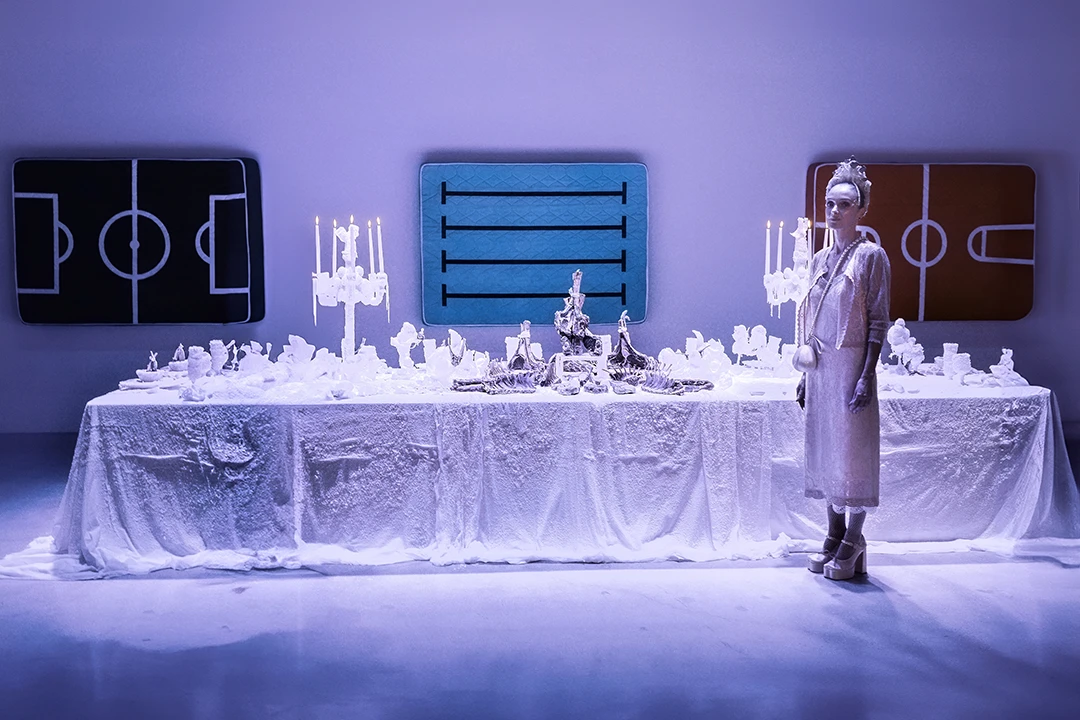
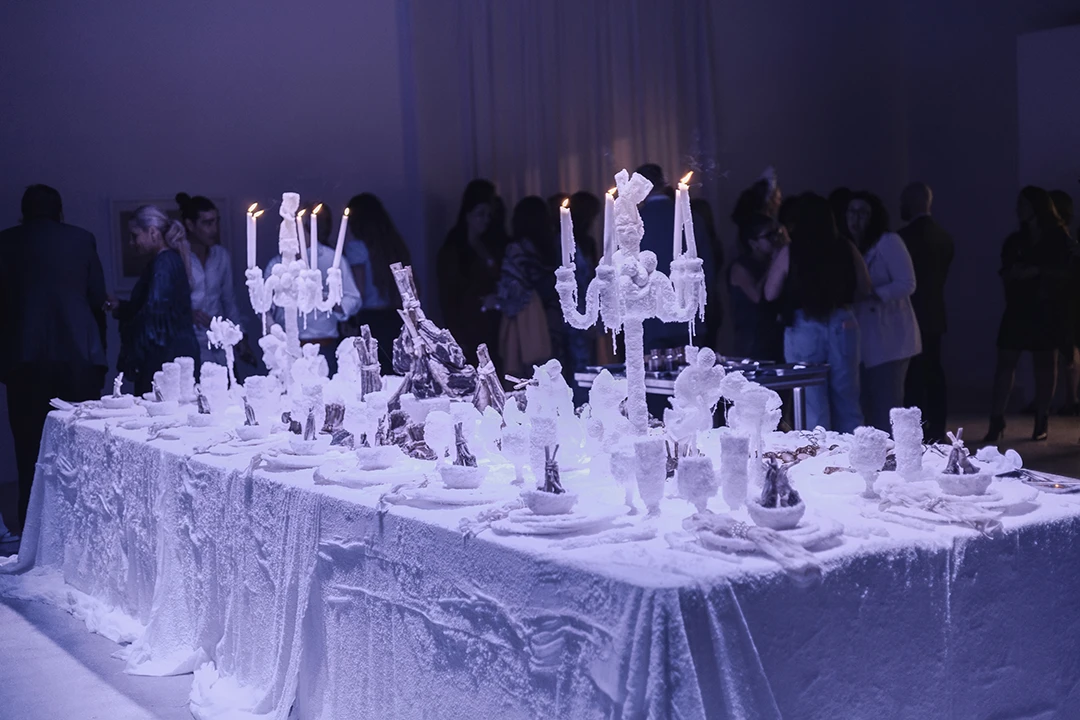
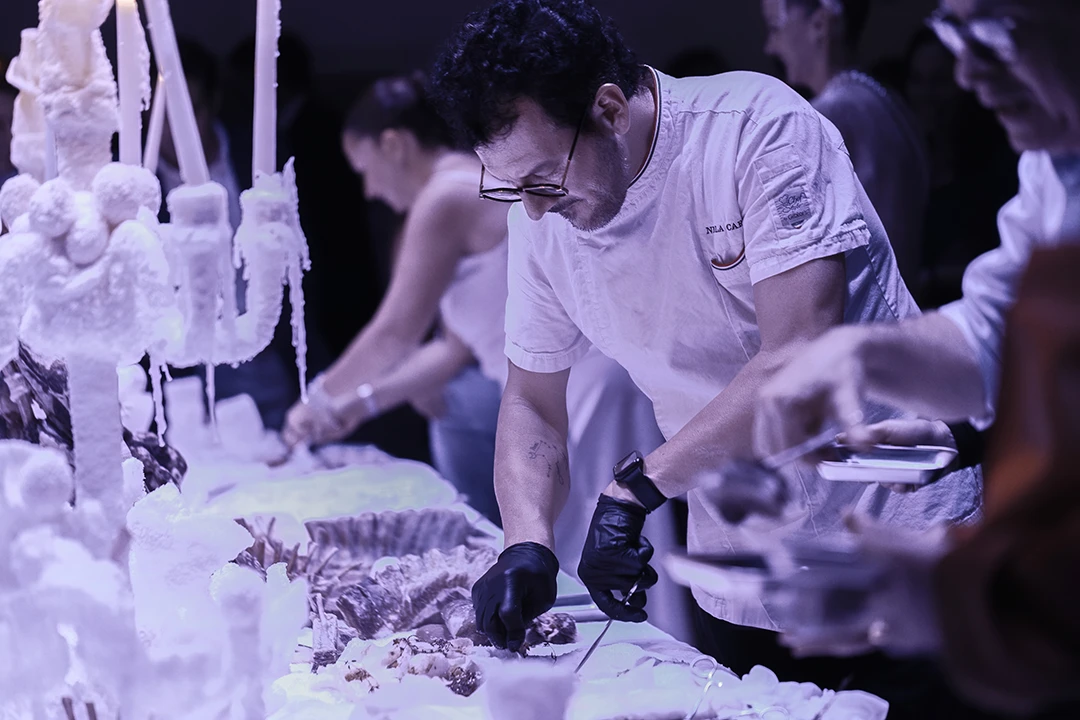
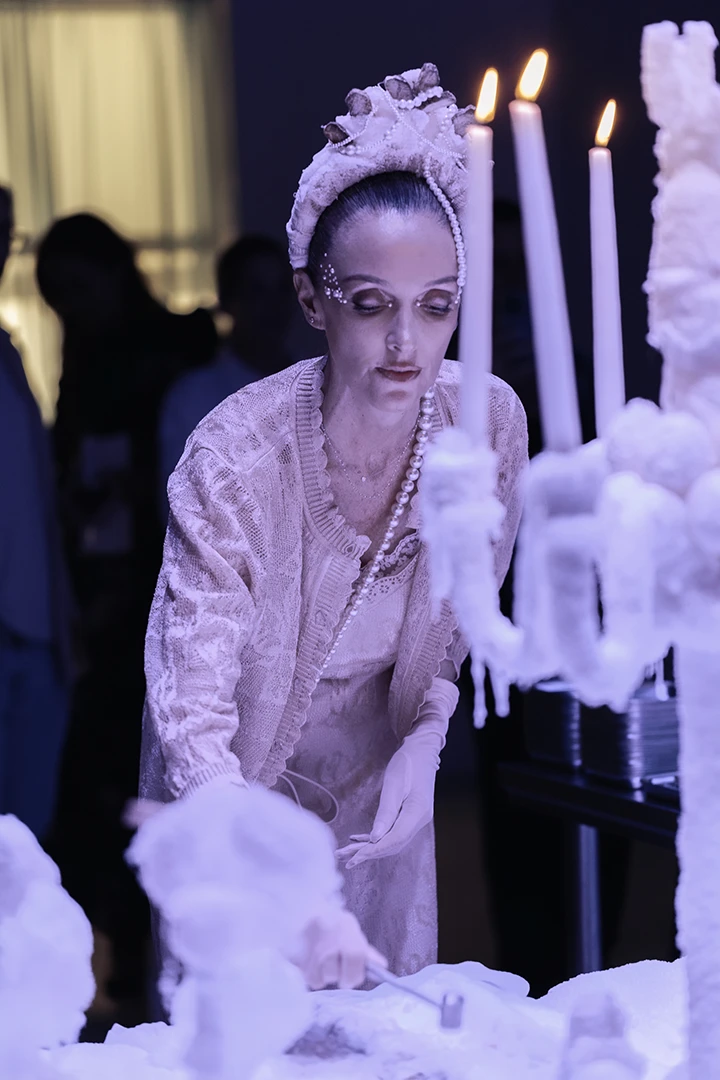
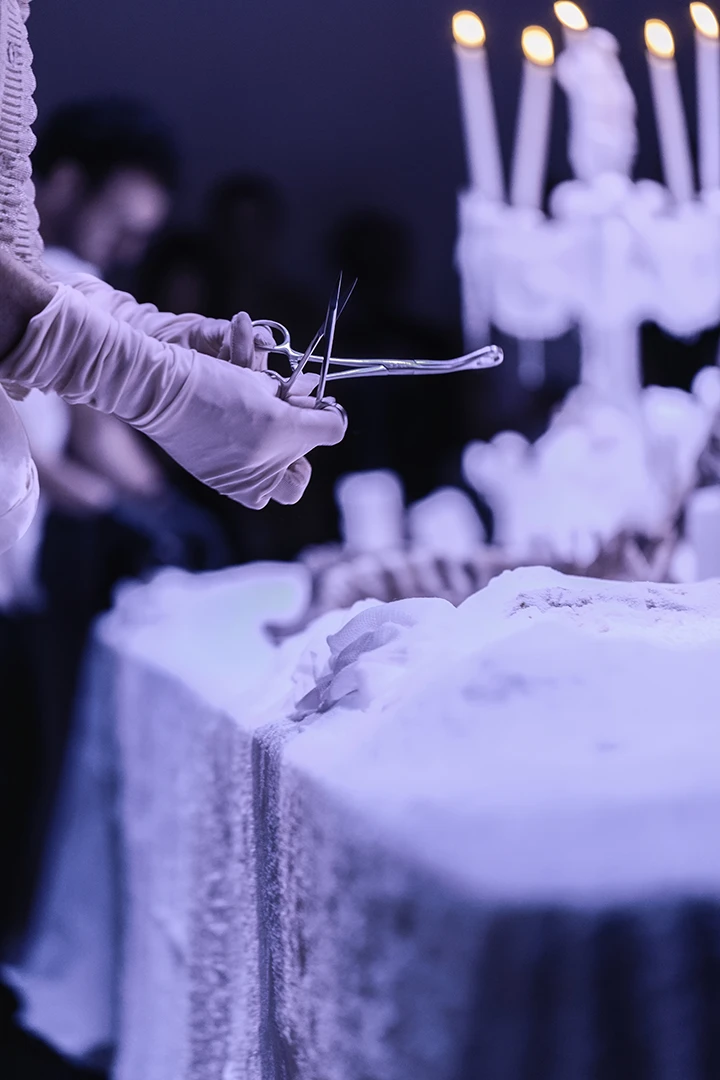
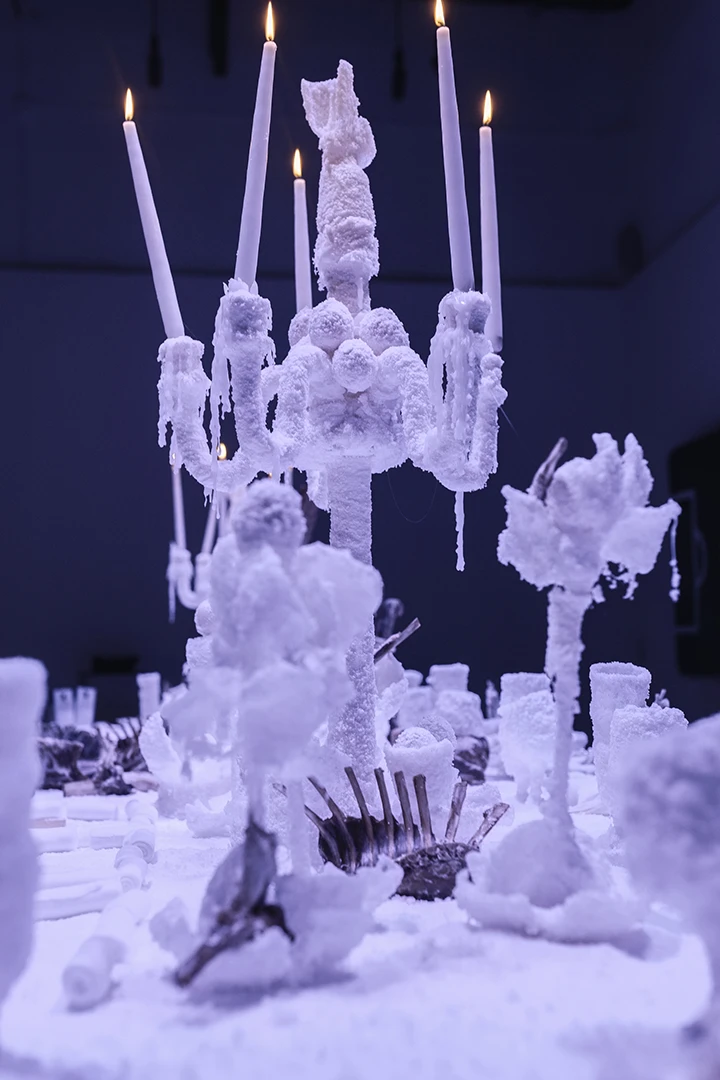
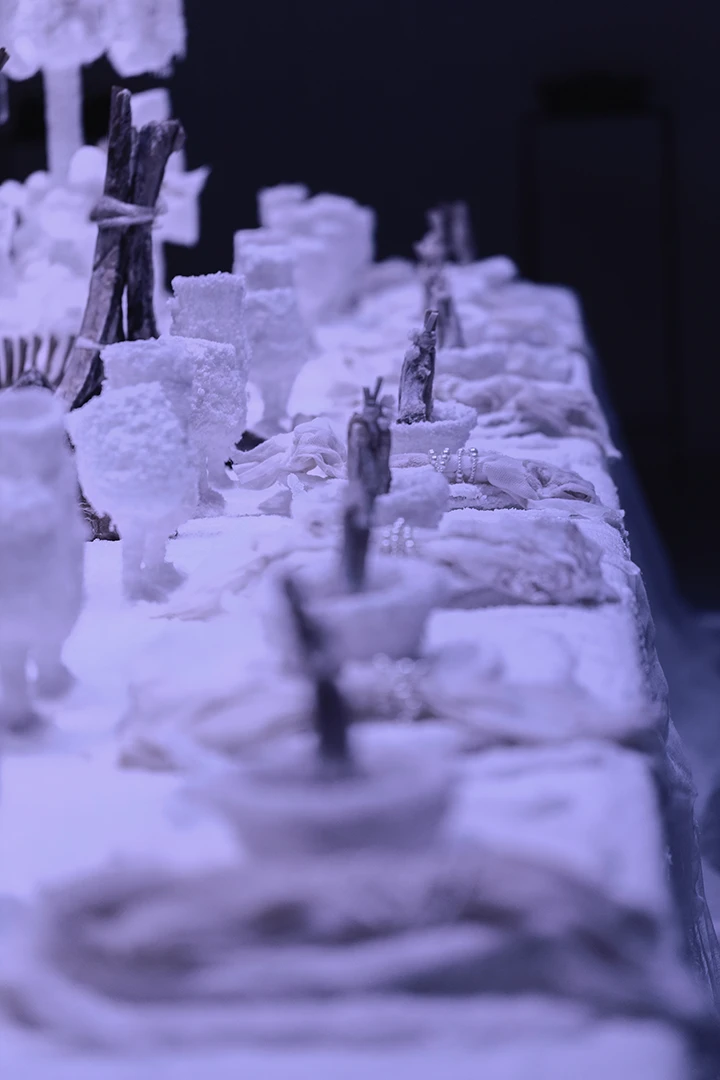
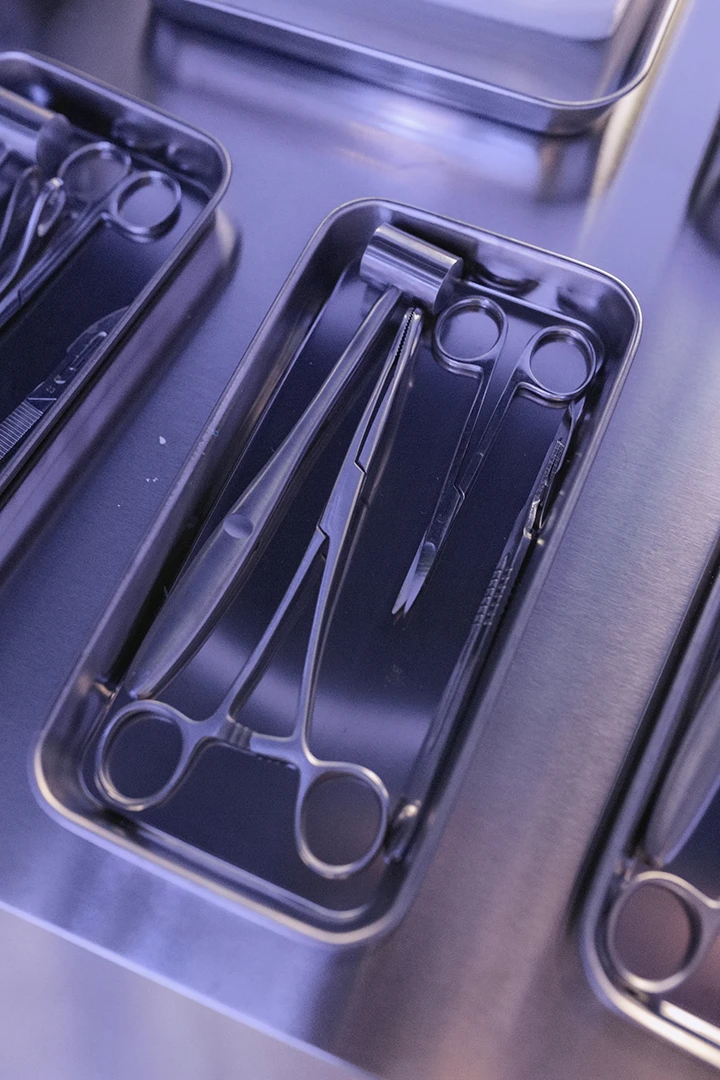
Now, upon the table, the food rests, covered by a thick layer, a crunchy and shiny crust that makes it appear inaccessible. The diners observe, as if the very appearance of the dishes is challenging, awaiting intervention. The crust is not merely an adornment; it is a barrier. Each dish within holds what needs to be discovered, but first, the surface must be broken. The crunch under the hammer, the tongs that struggle to extract the food—these mark the moment of transition: the passage from the unattainable to the tangible.
Each cut feels like a small ritual, an act of patience. One must break something, go beyond it, and in doing so, the crust yields—but in a controlled manner, as if asking the diners to pause, to appreciate what is to come. The table fills with silences, the faint sound of utensils against the surface, the barely audible sigh when a section finally gives way. There is a truce between what is displayed and what is hidden, a need to postpone what is awaiting consumption.
It is a moment where effort precedes pleasure, as if the reward, what lies beneath, could only be enjoyed after the wait, after breaking that layer, which is more than a mere coating. Each bite is now a revelation, but it is not only the taste that is savored. It is the process, the resistance, the small triumph of finally accessing what has been kept apart. In each dish, the crust is an invitation to something deeper, as if what is kept within that layer is waiting to be discovered only when the waiting time has passed.
What lies beneath that layer is not merely food. It is a testament to what is preserved, to what is put on hold, to what is retained until the right moment. And in that moment, in the small act of breaking the inaccessible, the diners feel satisfaction—not only from eating, but from having waited the necessary time to savor what is now offered to them.
Perhaps when the pieces of the crust finally fall, and the interior is revealed, there is a collective sigh, almost imperceptible, as if each person releases something they have carried within. The act of sharing that table is not merely about eating; it is purging something. It is letting go of a small part of the weight that everyone brings with them. Each bite becomes an act of reconciliation, a way of processing what once seemed unapproachable.
A catharsis, yes, but not in the way one imagines, with grand gestures or emotional outbursts. No, it is a subtle relief, almost intimate, that occurs while hands work, while teeth chew, while the salty taste lingers on the tongue as a reminder of what it means to preserve and release at the same time. Participating in this meal is not merely about breaking a layer; it is breaking something within oneself, without dramatics, but with a weight that is felt.
It cannot be said with certainty if everyone feels it, or if everyone perceives that lightness in the air. But it is possible that, upon finishing the meal, something has changed.